Do your students give one-sentence answers when responding to reading questions? Do you find yourself repeating phrases like “Can you explain more?” or “What’s your evidence?” over and over again? If so, you’re not alone.
Writing constructed responses can be one of the trickiest skills for students to master. That’s why I started using the RACES strategy in my classroom—and let me tell you, it made a huge difference.
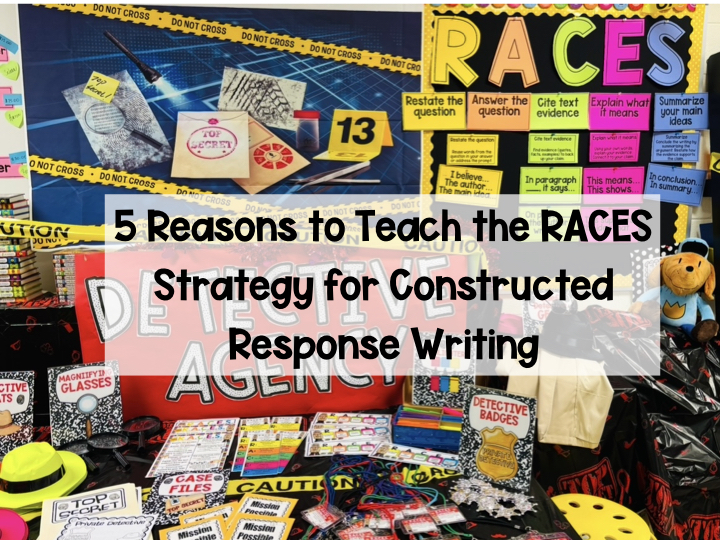
One of the best decisions I made was introducing RACES with a detective theme in my third grade classroom. I told my students they were “text detectives,” and their job was to investigate reading questions and find strong evidence to solve each “case.” We had magnifying glasses, themed anchor charts, and even detective folders for our writing work. Not only did this make the process more engaging for my students—it made it more fun for me to teach! I looked forward to our writing block every day, and the students were genuinely excited to write. During an observation, my principal commented on how involved and focused the class was, and she loved how the detective theme created a purposeful buzz around writing. It brought structure and energy into our workshop, which is a win in any classroom.
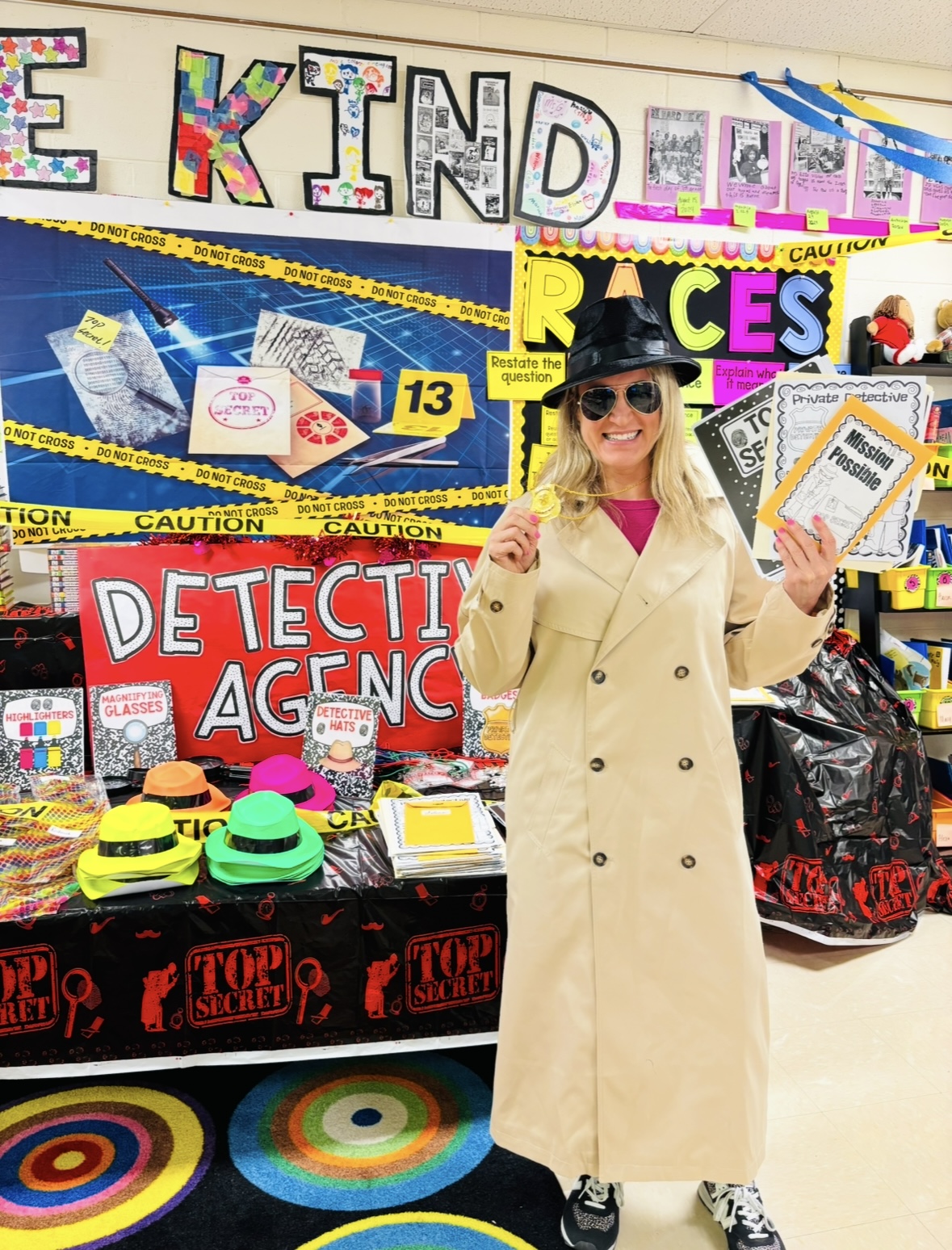
Instead of blank stares or incomplete answers, my students began crafting full, thoughtful paragraphs with confidence. Whether you teach third grade or upper elementary, RACES can help your students build strong writing habits, respond to text-dependent questions, and feel successful along the way.
1. It Gives Students a Clear Framework
When students are asked to write about their reading, many don’t know where to start. The RACES writing strategy gives them a step-by-step structure they can follow:
Restate the question,
Answer it,
Cite text evidence,
Explain the evidence, and
Sum it up.
It’s a simple acronym that helps break down paragraph writing into manageable pieces. Instead of “just write more,” we’re giving students a clear plan. This kind of structure is especially helpful for reluctant writers or English learners who need scaffolding. Over time, the routine becomes second nature—and that predictability builds confidence. RACES doesn’t limit creativity—it gives students a solid foundation to organize and express their thinking clearly.
2. It Builds Confidence in Responding to Text
Constructed response writing can be intimidating, especially when students are unsure of what’s expected. But with the RACES format, they don’t have to guess. Each step provides direction, so students know exactly how to respond to a text-based question. They’re no longer overwhelmed by a blank page—they’re empowered with a process. I’ve watched even my most hesitant writers begin to take ownership of their work once they understood the steps. They learn to restate the question, craft a clear answer, and back it up with evidence. The more they practice, the more confident they become—not just in writing, but in their overall comprehension. That confidence transfers to every subject, making RACES one of the most impactful tools in my classroom.
3. It Strengthens Reading Comprehension
Writing about reading deepens understanding. The RACES strategy helps students engage more closely with the text because they have to return to it, pull out relevant details, and explain their thinking. That process goes beyond surface-level comprehension and encourages analysis. Students begin to read with purpose—looking for evidence, drawing inferences, and connecting ideas. This habit of citing and explaining what they read makes them stronger thinkers and readers. I’ve even seen improvements in their speaking skills during book discussions and small groups. RACES teaches students how to process information, communicate clearly, and support their ideas—all key skills across content areas.
4. It Prepares Students for State Testing
We all know constructed response writing is a major part of most standardized tests. When students don’t have a strategy, they either skip these questions or give incomplete answers. That’s why using RACES writing prompts and text-dependent questions throughout the year is so effective. It mirrors the type of structured, evidence-based writing required on state assessments. Practicing RACES in the classroom builds the stamina, confidence, and skills students need to succeed during testing. They learn to slow down, plan their response, and check that they’ve included all the necessary parts. I teach my students to mentally “check off” each part of RACES as they write, which reduces stress and increases their chances of scoring well. Test day becomes less overwhelming when students feel prepared—and they often surprise themselves with how much they can do!
5. It Encourages Consistent Writing Habits
Consistency is key when teaching writing. Students thrive when they know what to expect. The RACES strategy becomes a routine that helps students stay organized and focused. Over time, I’ve seen my students apply this structure automatically, even without prompts or sentence starters. They begin to recognize what a complete response looks and feels like. This consistency leads to better writing across all subjects—from ELA and social studies to science and math explanations. It’s especially helpful for students who struggle with executive functioning or organizing their thoughts. RACES acts as a built-in checklist that keeps them on track and gives them confidence in their work. As a teacher, it simplifies instruction, allowing you to focus on refining ideas rather than reteaching structure again and again.
6. It Can Be Fun and Engaging—Especially with a Theme!
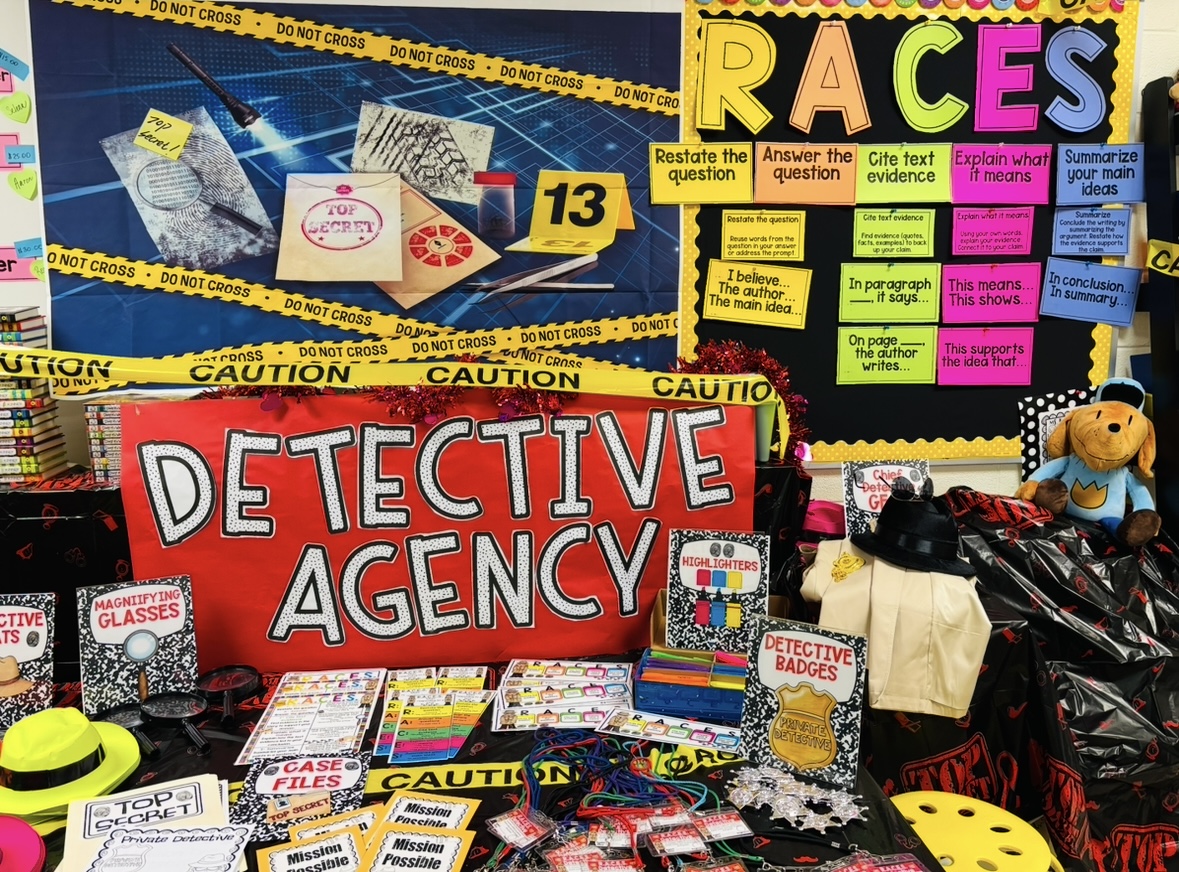
Writing doesn’t have to feel like a chore. One of my favorite ways to make the RACES strategy more engaging is by using a detective theme. I tell my students they’re “evidence detectives” on a mission to solve the case of a tricky reading question. Their job is to restate the prompt, answer it clearly, and then search the text for “clues” (aka evidence) to support their thinking. Framing writing as an investigation adds just enough excitement to hook even reluctant writers. I use themed anchor charts, student pages, and classroom visuals to build the detective vibe—and they love it. It turns something that could feel like hard work into a challenge they’re eager to complete. You don’t need to go all-out to make it memorable—a few themed materials can go a long way. It’s a great way to boost motivation while reinforcing the skills they need to succeed with constructed response writing.

Final Thoughts
If you’re ready to move beyond one-sentence answers and help your students write clear, thoughtful responses to reading, the RACES strategy is a great place to start. It builds strong writing habits, supports reading comprehension, and prepares students for high-stakes testing—all while making writing feel more manageable and even fun. Whether you’re introducing it for the first time or looking for ways to reinforce it throughout the year, RACES can transform the way your students approach writing.
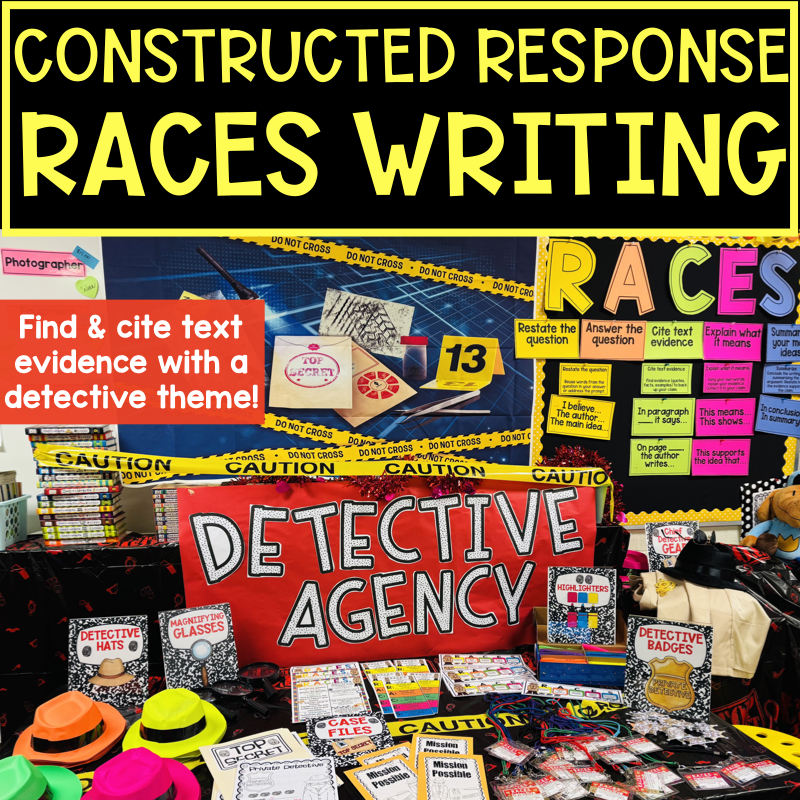
Looking for a way to make teaching RACES engaging and unforgettable? Transform your classroom into a detective agency and turn your students into Text Detectives! In this interactive, fun, and engaging unit, students will use a detective theme while learning how to write clear and organized responses, using RACES. Using the RACES strategy teaches students what good writers do, in all content areas- restating the question in a complete sentence, answering all parts of the question(s) / or prompts, citing text evidence, fully explaining what it means, and summarizing the main ideas.
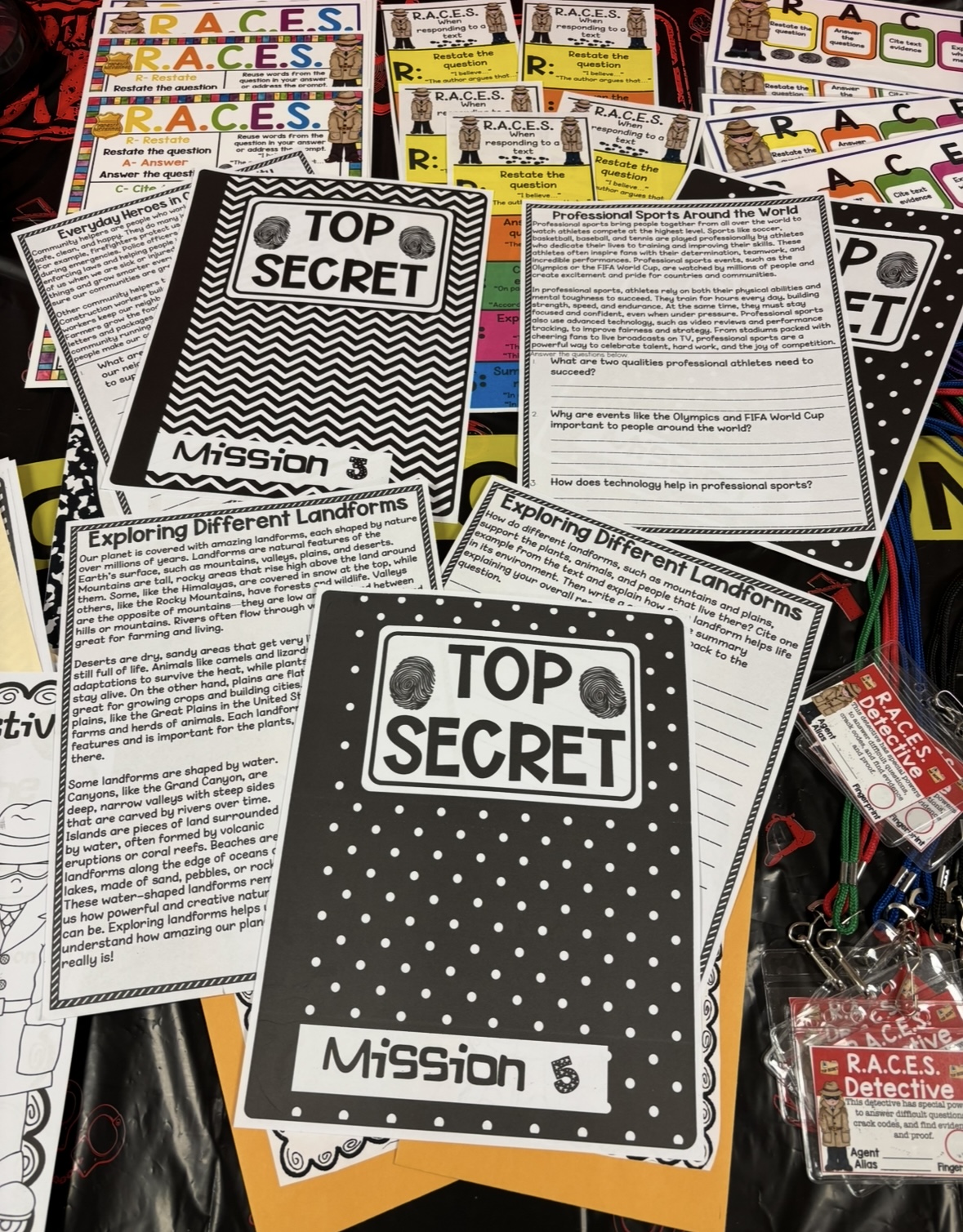
Students will get one mission for each letter of the RACES acronym. All five missions include an engaging informational text that students must read and complete correctly, before passing to the next.
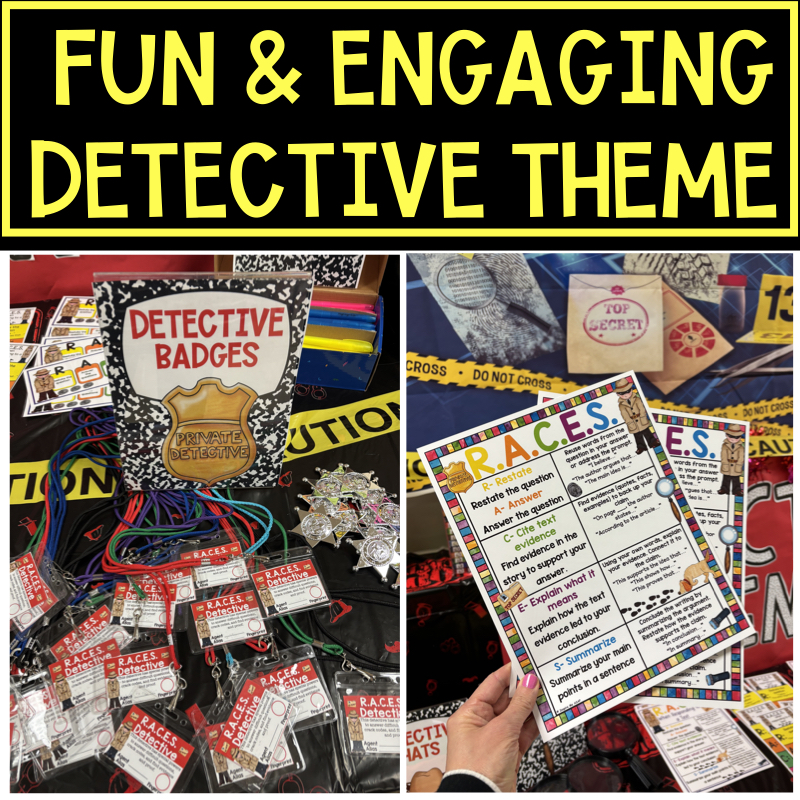
Missions include
- Mission One: Re-state the question
- Mission Two: Answer all parts of the question(s)/prompt
- Mission Three: Cite the text to provide evidence
- Mission Four: Explain your citation
- Mission Five: Summarize your main ideas
When detectives in training (your students!) successfully complete and pass all missions, they are awarded with the official Text Detective status. All text detectives get sworn in by the head of the department, their name and picture (with me!) gets posted on the “Meet the Text Detective” bulletin board. Families are notified of the official news, they are sworn in, and receive their official badge.
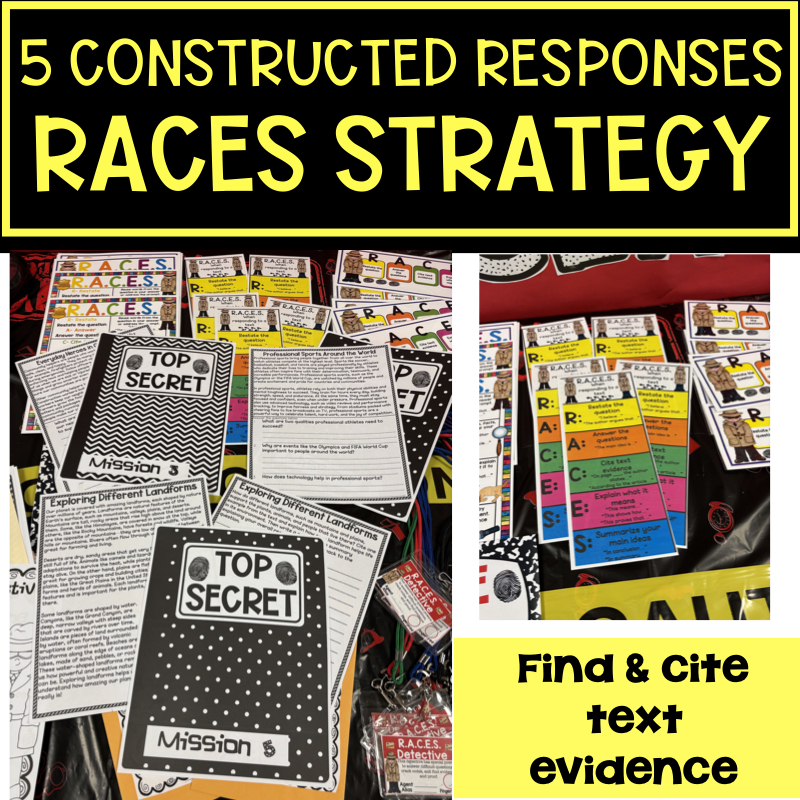
This resource is interactive, creative, and perfect for teaching:
- RACES writing strategy
- Constructed reading response
- Well-written paragraphs
- Short response for state testing
- Well-written essays
- Test prep
Excellent for RACES strategy practice and teaching and practicing short constructed responses!
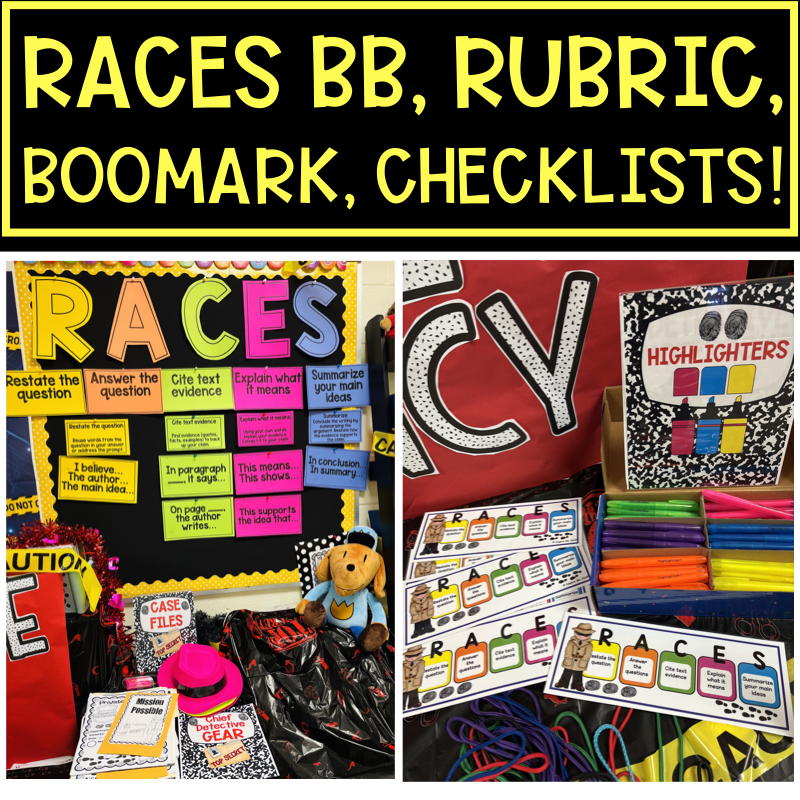
Resource includes:
- Detailed, step-by-step directions for how to transform your classroom into a Detective Agency
- Pictures showing this resource in action inside my own third-grade classroom
- 8 Color posters to print and display for the Detective Agency: Case Files, Detective Hats, Highlighters, Magnifying Glasses, Highlighters, Chief Detective Gear, Detective Gear, Detective Notebooks, Detective Badges
- Detective Badges to print- Two different options
- Meet the Text Detectives Bulletin Board Letters in BW
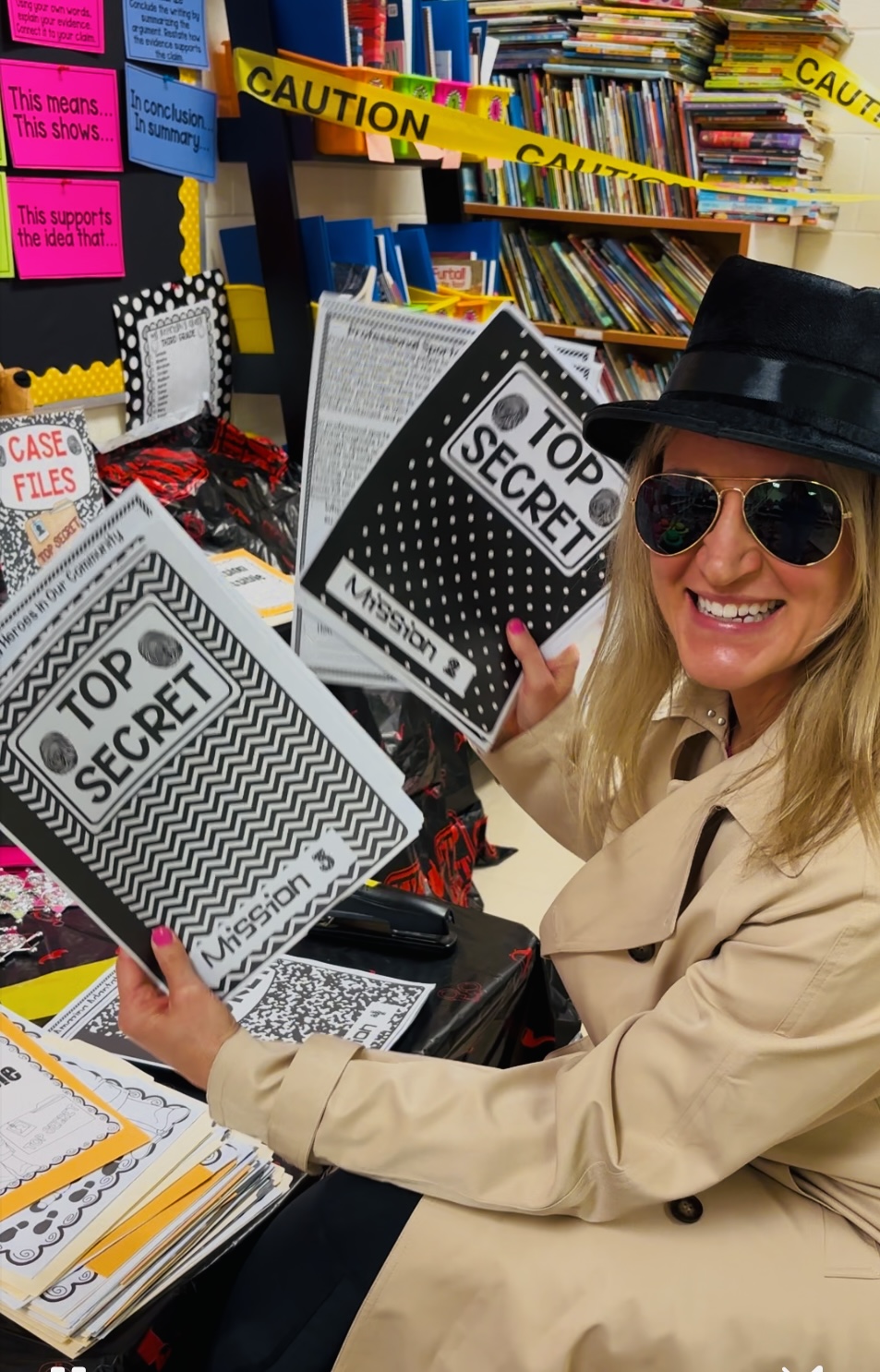
- Top Secret Case Files- color and BW option
- Private Detective Status Packet- The Chief of Detective (that’s you!) checks “pass” or “retest” as students complete each mission. This is a great way to keep track of each student’s status.
- RACES strategy posters to print and display- color and BW option
- RACES student bookmarks- This is an effective tool for students to reference as they write a constructed response.
- RACES graphic organizer- This handout will help students organize their writing and learn to write the perfect response while citing text evidence and responding to a writing prompt or a constructed response question.
- RACES writing rubric
- RACES checklists for
- RACES self-assessment- The perfect interactive tool for writers to take ownership over their writing.
- RACES highlighter strategy lesson and materials
- TOP SECRET
- RACES bulletin board posters
- Scaffolded Options – graphic organizer, sentence stems,
- Say goodbye to short, one-sentence answers and hello to strong, detailed paragraphs!
The RACES Constructed Response Paragraph Writing Resource is here to turn even the most hesitant writers into confident, capable responders. With this resource, your students will master the art of answering text-dependent questions with clear, well-structured responses that showcase their understanding. Get ready to see their writing skills take off!
CLICK HERE TO PURCHASE: Constructed Response RACES Strategy | Writing Passages & Prompts