If you’re looking for ways to improve student engagement during writing in grades 1–5, these classroom-tested strategies can help!
If writing time has started to feel harder lately, you’re not alone. This stretch of the school year can be especially challenging for elementary teachers. The weather is cold, motivation is lagging, and students in grades 1–5 often struggle to stay engaged during writing instruction.
As a classroom teacher, I’ve felt this shift right alongside my students. Writing already requires a lot of focus and stamina, and when energy is low, engagement can drop quickly. That’s why I’ve been intentional about using simple, realistic strategies to increase student engagement during writing time—without adding more prep or stress.
These are strategies I actively use in my elementary classroom, and they’ve helped re-energize writing instruction, boost motivation, and make writing time feel enjoyable again for both my students and me.
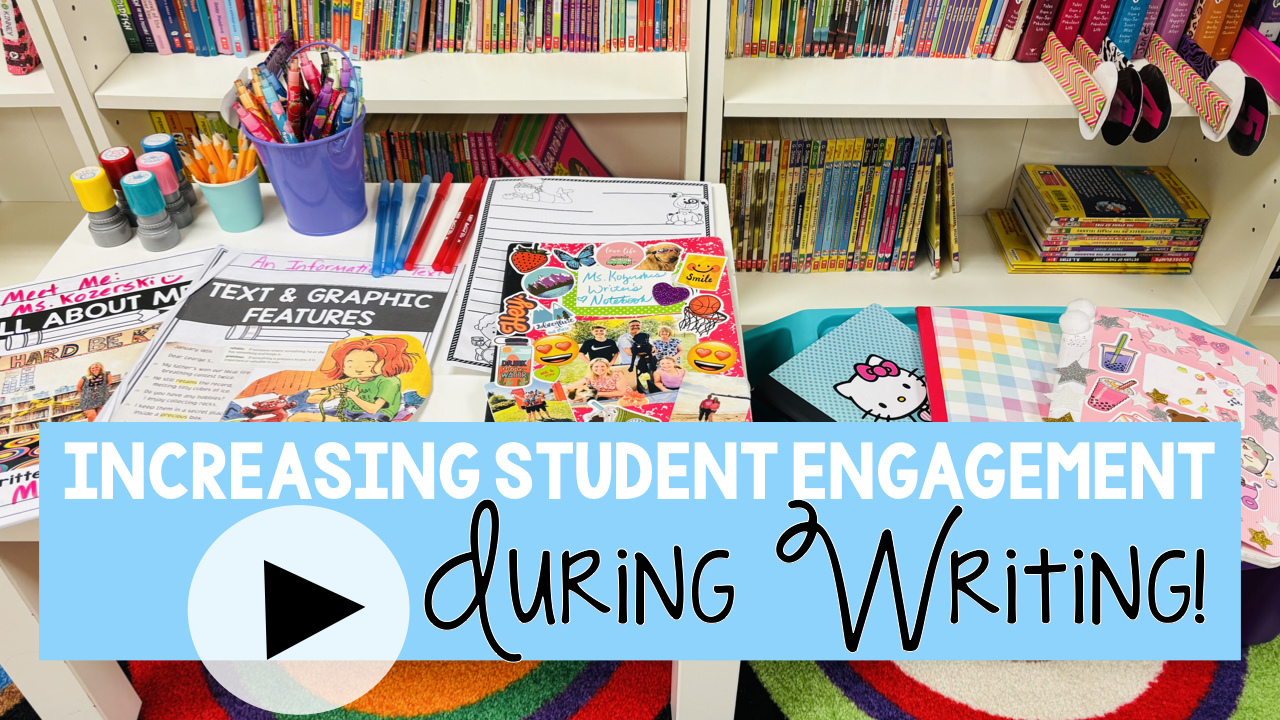
Want to watch me explain these strategies on video? Check out my new YouTube video, where I share what these strategies look like in my third-grade classroom!
YouTube Video: Increase Student Engagement with Writing
1. Provide Student Choice to Increase Writing Engagement
One of the most effective ways to increase student engagement in writing is by providing meaningful choice. When students feel connected to their writing topics, they are far more motivated to write—and to keep writing.
Choice doesn’t have to be overwhelming or unstructured. For example, during informational writing, I allow students to choose an animal or topic of interest. That single decision instantly increases buy-in. I also use tools like heart maps to help students generate personal ideas for narrative writing and journaling.
Offering options such as blank book templates, different paper layouts, writing journals, or letter-writing templates gives students a sense of ownership. When elementary students feel their ideas matter, writing becomes something they want to do—not something they avoid.
2. Use Fun, Purposeful Writing Tools
Elementary students love novelty, and writing tools can be a powerful motivator when used intentionally. Special pens reserved for the writing process, tiny books for final drafts, gel pens as a celebration tool, or decorated writer’s notebooks can completely change how students feel about writing.
These tools don’t distract from learning—they support it. They make writing feel important and special. When students associate writing time with positive experiences, they’re more willing to persevere through the harder parts of the writing process.
Using fun writing tools also helps reinforce that writing is not just an assignment—it’s a craft worth taking pride in.

3. Create a Writing Environment That Supports Focus and Creativity
The classroom environment plays a huge role in writing engagement for elementary students. Writing requires focus, creativity, and a sense of calm, so I intentionally adjust the environment during writing time.
This might look like soft background music, flexible seating options such as carpet squares or lap desks, dimmed lights, or lamps instead of overhead lighting. These small changes signal to students that writing time is different and important.
Creating a cozy, inviting writing environment helps students settle in, reduces distractions, and supports longer writing stamina—especially for students in grades 1–5.
4. Provide Opportunities for Peer Writing and Collaboration
Writing doesn’t always have to be a silent, independent activity. Many students benefit from talking through their ideas before writing. Providing opportunities for peer writing can significantly increase engagement and confidence.
In my classroom, students might brainstorm together, plan side by side, or work collaboratively during informational writing units. Writing with peers helps students clarify their thinking, generate ideas, and feel supported.
This approach also builds a strong classroom community and mirrors how writing often works in the real world. When used intentionally, peer collaboration becomes a powerful tool for motivating elementary writers.
5. Celebrate, Share, and Publish Student Writing Authentically
One of the biggest factors in writing motivation is purpose. When students know their writing will be seen, shared, or celebrated, engagement increases naturally.
I regularly take photos of students writing and share them with families, display writing in the hallway, or invite administrators to observe writing time. We also write for real audiences—letters for holidays, special events like Custodian Day or Veterans Day, or classroom celebrations.
Authentic publishing sends a clear message to students: your writing matters. This builds pride, confidence, and a stronger writing identity for elementary learners.
Final Thoughts for Elementary Writing Teachers
This time of year can feel heavy, and if writing engagement is slipping, it doesn’t mean you’re doing anything wrong. Sometimes small, intentional shifts are all it takes to bring energy back into your writing block.
These writing engagement strategies for grades 1–5 have helped me re-energize writing instruction and support my students during a challenging part of the school year. You don’t need to implement all five at once—start with one and build from there.
Improving student engagement during writing doesn’t require a full curriculum overhaul—small, intentional shifts can make a big impact.
Writing should feel meaningful, creative, and achievable for elementary students. With the right supports in place, it can become a part of the day they truly enjoy.